

News Center
Blog
Common Issues in Low-Temperature Thermal Management Systems for New-Energy Mining Trucks
Release time:
2026-01-16
A low-temperature thermal management system is a system that effectively controls the interior temperature of a vehicle in low-temperature environments. It not only enhances the vehicle’s operational efficiency but also ensures that critical components such as batteries and electronic devices function properly even in cold weather.
New-energy mining trucks offer significant advantages in environmental protection and energy conservation. However, as we all know, in cold weather—especially in extremely cold environments—the range of new-energy mining trucks is reduced, motor and electronic control systems may encounter problems, and operational efficiency is greatly diminished. To address these challenges faced by new-energy mining trucks in extremely cold environments, Yusheng Technology has developed and manufactured a low-temperature thermal management system.
A low-temperature thermal management system, as its name suggests, is a system designed to effectively control the temperature inside a vehicle in low-temperature environments. Not only does it enhance the vehicle’s operational efficiency, but it also ensures that critical components such as batteries and electronic devices function properly even in cold weather. For new-energy mining trucks, the low-temperature thermal management system acts like their “heater,” guaranteeing stable operation under extremely cold conditions.
What is the working principle of a low-temperature thermal management system? How does it differ from traditional fuel-based heaters?
The low-temperature thermal management system features an oil-fired heater—but not just any ordinary oil-fired heater. It’s a smart, variable-frequency heater specially developed for new-energy commercial vehicles.
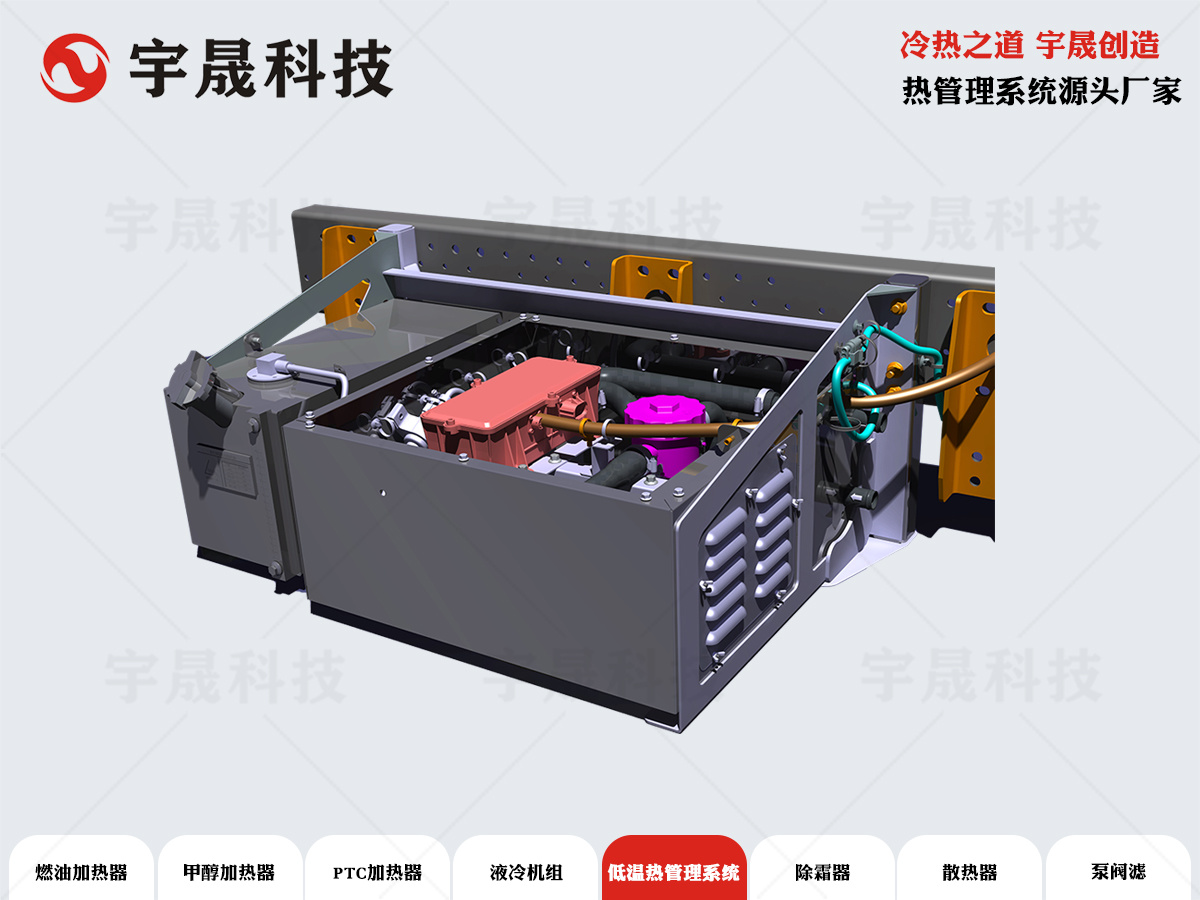
The low-temperature thermal management system maintains a comfortable temperature inside the vehicle by means of heating and heat preservation. It primarily relies on heating devices to transfer heat to the components that need protection. It’s just like putting a warm “outer layer” on your car, allowing it to feel as cozy as a spring breeze even in the coldest winter days.
The low-temperature thermal management system, depending on the configuration, can be equipped with either a single oil-based system or a dual-core oil-electric system, meeting the diverse needs of different vehicle models.
Why is a low-temperature thermal management system so important?
In cold weather, battery performance tends to decline, directly affecting the vehicle’s range and power output. The low-temperature thermal management system addresses this issue by maintaining the battery’s operating temperature, thereby ensuring its performance remains unaffected. Without a low-temperature thermal management system, new-energy mining trucks in extremely cold environments would experience difficulties starting up and excessive power consumption.
How to maintain a low-temperature thermal management system?
Maintaining a low-temperature thermal management system is actually not complicated. Regularly checking the system’s condition, keeping it clean, and ensuring there are no blockages are all essential steps. In addition, it’s recommended that vehicle owners have their systems inspected and maintained in advance before the onset of cold weather, so as to avoid any issues at critical moments.
Currently, the low-temperature heat pipe system developed by Yusheng Technology has undergone continuous upgrades and optimizations. It features a high degree of integration, a dual-core heat source in a single unit, and highly efficient heating performance. The heat source is stable and reliable, enabling not only individual battery thermal management but also whole-vehicle heating and preheating of the motor and electronic control systems—thus extending vehicle range and improving operational efficiency.
Latest News