

News Center
Blog
Precision Liquid Cooling Temperature Control: The "Temperature Manager" Ensuring Efficient Operation of Commercial and Industrial Energy Storage Systems
Release time:
2025-06-13
Commercial energy storage systems, as critical infrastructure for achieving efficient energy utilization and grid stability, are experiencing explosive growth. However, if the heat generated during the operation of energy storage battery packs is not effectively managed, it can not only reduce the efficiency of the storage system but also pose significant safety risks. In such cases, advanced liquid-cooling units for batteries emerge as the core solution to ensure the efficient and safe operation of commercial and industrial energy storage systems—truly acting as the "temperature guardian" for these systems.
Commercial and industrial energy storage systems, as critical infrastructure for achieving efficient energy utilization and grid stability, are experiencing explosive growth. However, if the heat generated during the operation of energy storage battery packs isn't effectively managed, it can not only reduce the efficiency of the storage system but also pose significant safety risks. At this point, sophisticated Battery Liquid Cooling Unit It has become the core component ensuring the efficient and safe operation of industrial and commercial energy storage systems—truly earning the title of the "temperature manager" for these systems.
1. Why Do Industrial and Commercial Energy Storage Systems Urgently Require Precise Temperature Control?
Commercial and industrial energy storage systems commonly use lithium batteries as the energy-storage medium, as lithium batteries are highly sensitive to operating temperatures. Research shows that when the battery pack’s operating temperature exceeds 35°C, its charge-discharge efficiency drops by 10%–15%, while its cycle life is shortened by 20%–30%. Moreover, significant temperature variations—particularly when the temperature difference among individual cells within the battery pack exceeds 5°C—can accelerate battery degradation and, in severe cases, even trigger the risk of thermal runaway. Traditional air-cooling temperature-control technologies, however, are increasingly inadequate for meeting the stringent cooling demands of high-density, large-capacity commercial and industrial energy storage systems due to their limited heat dissipation efficiency and poor temperature-control accuracy. In contrast, advanced liquid-cooling temperature-control solutions have emerged as a superior choice, thanks to their exceptional performance.

II. Liquid-Cooled Units: The Core "Tool" for Precision Temperature Control
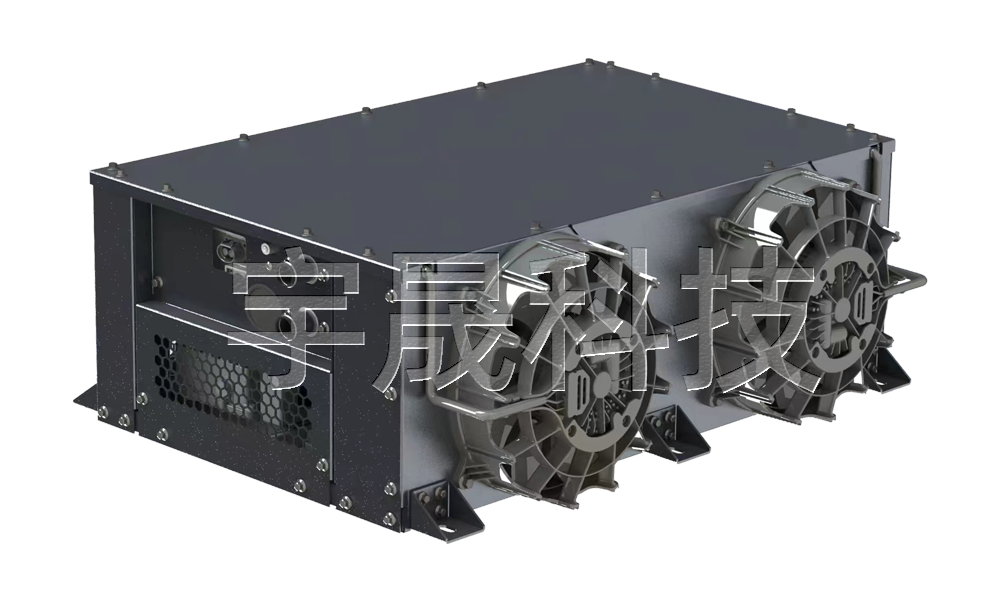
As the core equipment for precise temperature control, the liquid-cooling unit efficiently dissipates heat generated by the battery pack by circulating coolant to absorb and remove excess thermal energy. Compared to air cooling, liquid cooling boasts a heat transfer coefficient that is 10 to 20 times higher, enabling the battery pack temperature to be maintained within the ideal range of 25°C to 30°C—with temperature fluctuations kept within ±2°C. The system operates by using a circulation pump to drive the coolant through a sealed pipeline. After absorbing heat from the battery modules, the cooled coolant returns to the liquid-cooling unit’s heat exchanger, where the refrigeration system removes the absorbed heat and releases it into the surrounding environment, thus creating a closed-loop temperature-control system.
In addition, the liquid-cooled units also feature advantages such as modular design and intelligent control. The modular design makes installation and maintenance easier, while supporting flexible expansion of the energy storage system. Meanwhile, the intelligent control function can automatically adjust the coolant flow rate and cooling power based on real-time parameters like battery temperature and environmental conditions, achieving the dual goals of precise temperature control and energy savings.
3. How does precision liquid cooling and temperature control empower commercial and industrial energy storage systems?
1. Enhance System Efficiency and Lifespan
Precise temperature control ensures the battery pack operates within the optimal temperature range, effectively reducing internal resistance, minimizing energy loss, and enhancing charge-discharge efficiency. After implementing a sophisticated liquid-cooling temperature control system in a certain data center's commercial and industrial energy storage project, the overall efficiency of the energy storage system improved by 8%, while the battery pack's cycle life was extended by approximately 30%, significantly lowering the total lifecycle costs.
2. Enhance system security
By precisely controlling the battery pack temperature to ensure uniformity, we eliminate the risk of thermal runaway, thereby establishing a robust safety barrier for commercial and industrial energy storage systems. Additionally, the advanced liquid-cooling temperature control system can be seamlessly integrated with fire alarms and monitoring systems—so that, upon detecting any abnormal temperature fluctuations, it immediately activates the emergency response mechanism, ensuring the safe and stable operation of the energy storage system.
3. Adapting to Complex Application Scenarios
Industrial and commercial energy storage systems have diverse application scenarios, ranging from industrial parks to data centers, with significant environmental variations. Liquid-cooled units feature a wide operating temperature range, enabling stable performance in environments as low as -20°C to as high as 50°C. This makes them well-suited to meet the demands of different regions and operational conditions, ensuring that the energy storage system can maintain high efficiency even under extreme circumstances.
IV. Future Trends: Liquid Cooling Temperature Control Technology Continues to Evolve
As the commercial and industrial energy storage market continues to expand, the demand for liquid-cooling temperature control technology is steadily increasing. In the future, liquid-cooling units will evolve toward greater intelligence, integration, and efficiency. The deep integration of AI algorithms and big data analytics will enable predictive maintenance and dynamic optimization of temperature control systems, while seamless collaboration with energy storage inverters and battery management systems will further enhance overall system efficiency. Meanwhile, ongoing research into advanced cooling fluids and high-performance heat-exchange materials is poised to drive liquid-cooling technology to new breakthroughs.
Precision liquid-cooling temperature control technology, acting as the "temperature guardian" for the efficient operation of industrial and commercial energy storage systems, is safeguarding the high-quality development of the energy storage industry with its outstanding performance and continuously innovative advancements. In the wave of energy transformation, mastering precision liquid-cooling temperature control technology is undoubtedly the key to seizing the initiative in the industrial and commercial energy storage market.
If you're planning or building industrial and commercial energy storage projects, Zhengzhou Yusheng's battery liquid-cooling units are undoubtedly a reliable choice for you.
Latest News