

News Center
Blog
Anxiety about the range of new energy vehicles? YuSheng's low-temperature thermal management system is here to help!
Release time:
2025-08-01
The market share of new-energy vehicles is gradually increasing; however, winter range anxiety continues to pose a significant challenge for both automakers and EV users. Today, let’s delve deeper into the issue of range anxiety in new-energy vehicles—and explore how advanced low-temperature thermal management systems can help alleviate this concern.
The market share of new-energy vehicles is gradually increasing; however, winter range anxiety continues to pose a significant challenge for both automakers and new-energy vehicle users. Today, let’s delve deeper into the issue of range anxiety in new-energy cars, as well as Low-Temperature Thermal Management System How to overcome range anxiety in new energy vehicles.
Over 70% of new-energy vehicle owners frequently monitor their battery levels during daily use, and nearly 40% of them start feeling range anxiety when the charge drops below 50%. Moreover, this sense of range anxiety is further amplified in cold-weather conditions.

In the cold winter months, the driving range of new-energy vehicles often drops significantly. Data shows that when ambient temperatures fall below 0°C, the average reduction in a new-energy vehicle's range can reach 30% to 40%. For instance, consider a new-energy car with a claimed range of 500 kilometers—under low-temperature conditions, its actual range may drop to around 300 kilometers. This poses a considerable challenge for users who frequently travel long distances or have daily commutes that cover substantial mileage.
Why does low temperature have such a significant impact on the range of new-energy vehicles? Primarily, this is because cold temperatures negatively affect battery performance in multiple ways. Moreover, in cold weather, the vehicle's heating system consumes substantial amounts of electricity just to maintain a comfortable cabin temperature, further increasing the overall energy consumption of the vehicle and reducing its driving range. According to statistics, during winter, the heating system can account for as much as 20% to 30% of a new-energy vehicle's total energy usage.
Based on our analysis of the reasons behind the reduced winter range of new energy vehicles, if the battery is maintained at an optimal operating temperature and the vehicle's heating system doesn’t consume electricity, the winter range issue for new energy cars can be effectively addressed.
Yu Sheng Technology has focused on the thermal management systems for the new-energy vehicle industry for many years, successfully developing and producing a "Low-Temperature Thermal Management System."
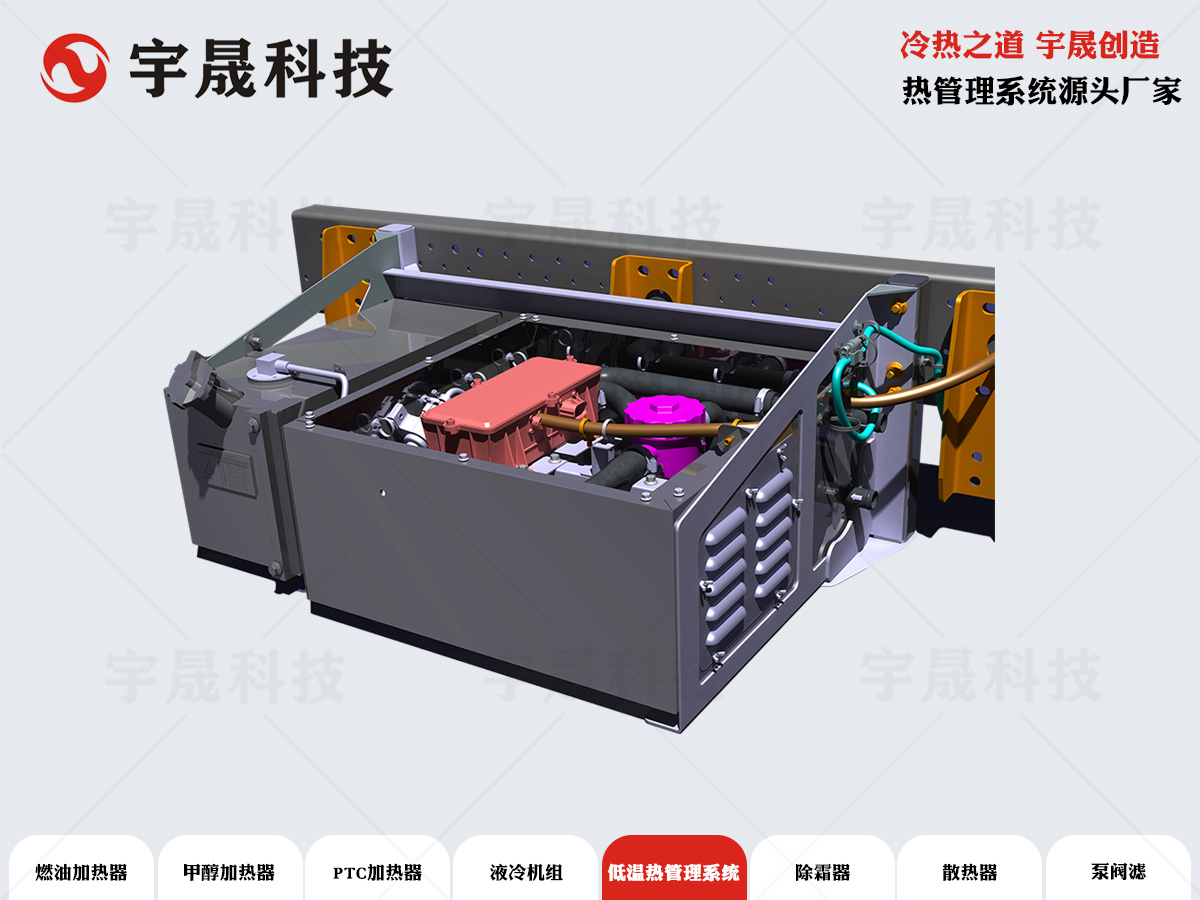
YuSheng Technology's core working principle of its low-temperature thermal management system is to maintain the power battery at an optimal operating temperature—whether in charging or discharging conditions—through various design solutions, thereby enhancing battery performance and effectively extending range.
Yusheng Technology's low-temperature thermal management system enables "electricity-free heating in winter," reducing power consumption caused by heating and further enhancing vehicle range.
Depending on the automaker, vehicle model, and specific cost-control requirements, Yusheng Technology can tailor-make low-temperature thermal management systems that not only effectively address winter-range anxiety in new-energy vehicles but also enhance the vehicles' competitive edge. If you happen to have thermal management needs for your new-energy vehicle battery, Zhengzhou Yusheng Technology is undoubtedly a reliable choice for you.
Latest News