

News Center
Blog
Can energy storage thermal management liquid-cooling units replace air cooling?
Release time:
2025-06-25
In energy storage systems, air cooling and liquid cooling are the two mainstream approaches for thermal management. However, in recent years, liquid-cooled units have gradually become the industry’s focal point due to their unique advantages. So, can liquid-cooled units for energy storage thermal management replace air-cooled ones?
In energy storage systems, air cooling and liquid cooling are the two mainstream approaches for thermal management, and in recent years, Liquid-cooled unit Leveraging its unique advantages, it has gradually become the industry's focal point. So, can energy storage thermal management liquid-cooled units replace air-cooled ones?
Characteristics of air-cooling systems
The air-cooling system uses air as the cooling medium, primarily relying on natural convection or employing devices like fans to induce forced convection, thereby dissipating the heat generated by the energy storage batteries.
The air-cooling system has a relatively simple structure, typically including a cooling fan, air ducts, and essential air filtration devices, among other components.
A major advantage of air-cooling systems is their lower cost—both the equipment purchase price and the initial installation costs are relatively easy to manage.
The drawbacks of air cooling cannot be overlooked. Due to air's low specific heat capacity and thermal conductivity, its heat exchange efficiency is relatively poor. As the power density of energy storage systems increases—and consequently, battery heat generation rises sharply—air-cooling systems struggle to remove heat quickly and effectively, often leading to excessively high cell temperatures. Moreover, air-cooling systems are significantly affected by ambient temperature and humidity; in harsh conditions such as high temperatures or high humidity, their cooling performance can be severely compromised.
Characteristics of liquid-cooled units
The liquid-cooled unit uses liquid as the cooling medium, leveraging the liquid's high specific heat capacity and excellent thermal conductivity to achieve efficient heat dissipation.
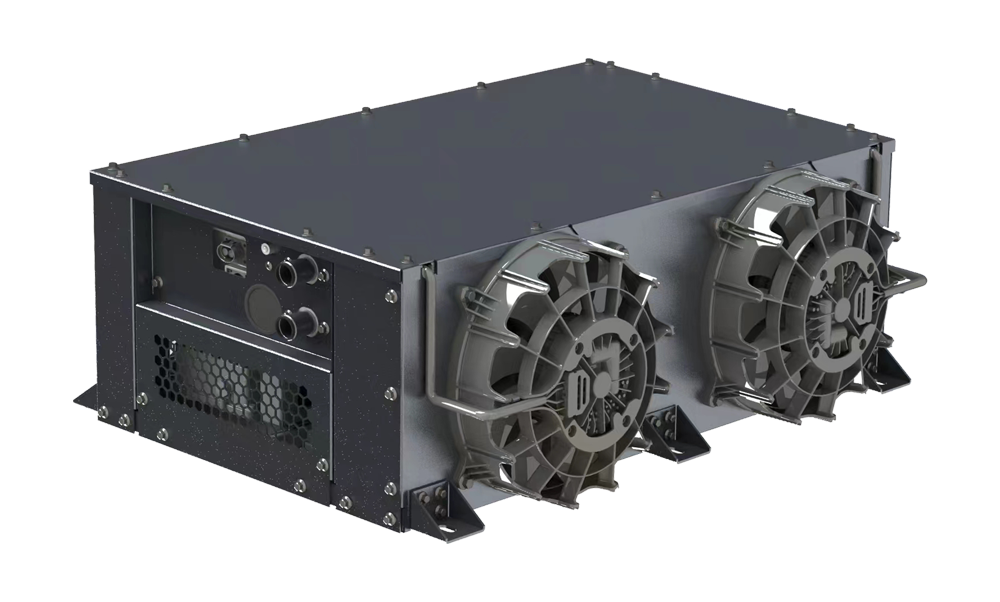
Compared to air cooling, liquid-cooling systems offer a significant advantage in heat dissipation efficiency. Since liquids have much higher heat-carrying capacity, thermal conductivity, and enhanced convective heat transfer coefficients than air, they can swiftly remove large amounts of heat, keeping the battery cells within their optimal operating temperature range. Additionally, liquid-cooling systems excel in thermal uniformity, effectively minimizing temperature differences among battery modules, which greatly improves battery consistency and, in turn, extends the overall lifespan of the battery pack.
Liquid-cooled units feature a more compact design and take up less space, allowing for increased energy storage capacity within limited site areas while maintaining low system operating noise. In terms of protection performance, the enclosure design of liquid-cooled units supports higher IP protection ratings, effectively handling harsh weather conditions such as wind and sand.
In terms of two key performance metrics—cooling efficiency and temperature uniformity—liquid-cooled units clearly outperform air-cooled systems. As energy storage systems evolve toward higher power densities and greater capacities, battery heat generation has surged significantly, making it increasingly challenging for air-cooled systems to meet cooling demands. In contrast, liquid-cooled units are better equipped to handle these changes, ensuring the stable operation of energy storage systems. Moreover, from the perspective of extending battery life, liquid-cooled units offer superior protection for batteries, ultimately helping to reduce long-term operating costs.
Currently, whether it's large-scale energy storage plants on the power generation side, grid-side energy storage projects, or the industrial and commercial energy storage sector, the adoption rate of liquid-cooling technology is rapidly increasing. This market trend highlights the growing importance of liquid-cooled units in thermal management for energy storage systems, as they are clearly beginning to replace air-cooled systems.
Practical Case Analysis of Liquid-Cooled Units for Energy Storage Thermal Management
The Ningxia Electric Investment Ningdong Base 100MW/200MWh shared energy storage power station demonstration project, as well as the Gansu Linze 100MW/400MWh shared energy storage power station project, both utilize liquid-cooling temperature control technology. In actual operation, these projects have effectively managed battery temperatures through liquid-cooling units, ensuring the efficient and stable performance of the energy storage systems while enhancing both power quality and grid stability. The liquid-cooling units have demonstrated remarkable effectiveness in reducing battery temperature differences and extending battery lifespan, firmly proving the feasibility and advantages of liquid-cooling technology in large-scale energy storage projects.
Overall, in the field of energy storage thermal management, liquid-cooled units stand out due to their superior advantages in heat dissipation efficiency, temperature uniformity, extended battery life, and ability to adapt to the growing trend of high power density. As a result, they are well-positioned to replace air-cooled systems in medium-to-high power applications—as well as in scenarios where high performance and stability of energy storage systems are critical requirements.
If you're planning or building industrial and commercial energy storage projects, Zhengzhou Yusheng's Industrial and Commercial Energy Storage Thermal Management System – Energy Storage Battery Liquid Cooling Unit It is undoubtedly your trusted choice.
Previous Page
Latest News